
Mic Check
For the moments when escalation feels like the only option

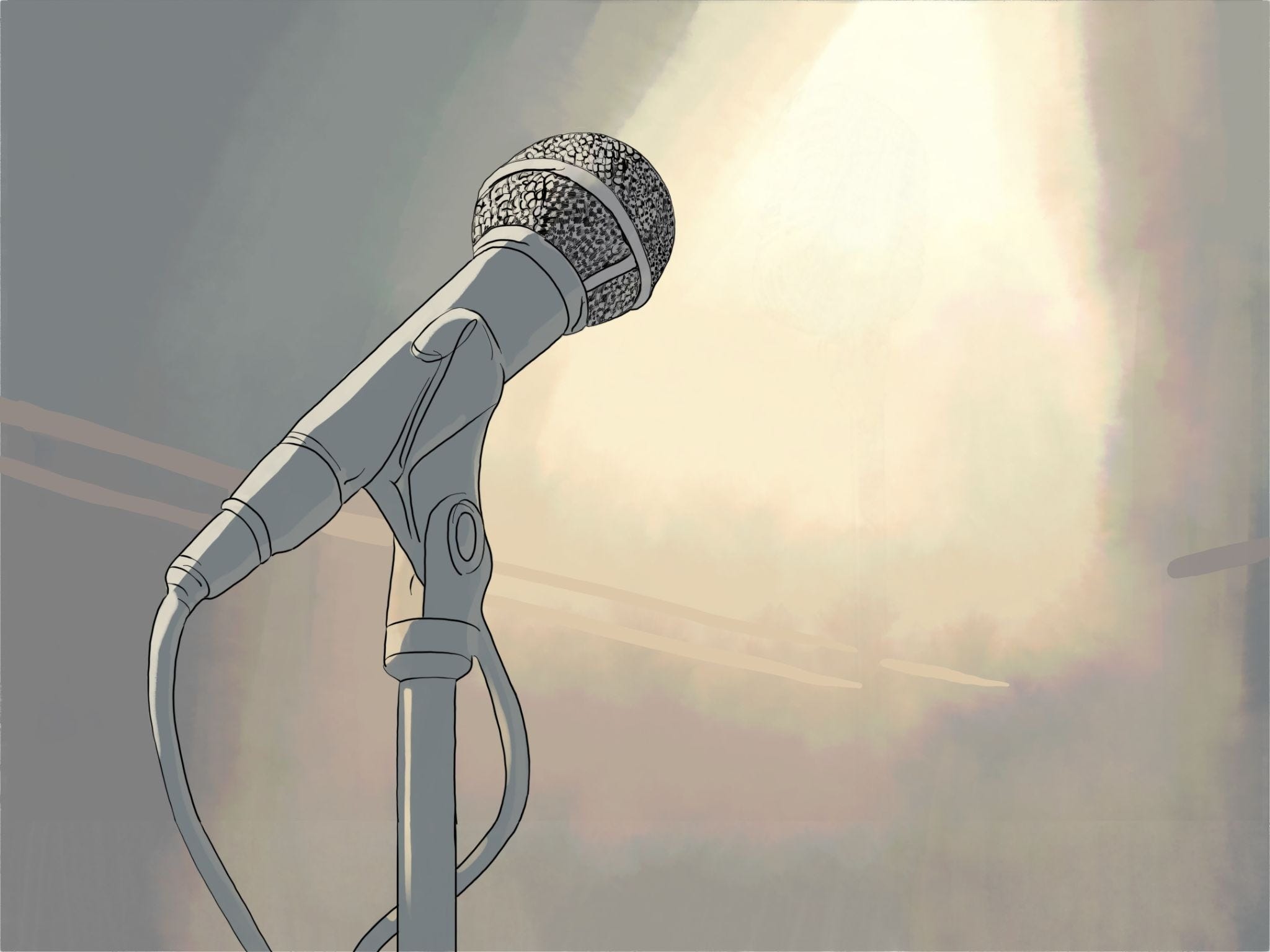
My job is simple: reveal what is said and the tone in which it is said.
But it’s not easy.
I can turn a passing remark into a headline.
I expose what cannot be taken back.
I make the room hear what it might prefer not to notice.
Power behaves differently when I’m live.
I am positioned inches from her mouth, angled just so.
It’s clear she knows exactly what she is about to do.
Her posture carries the fingerprints of rehearsal everywhere,
in the calculated lean toward me,
the disciplined restraint,
the spine held tall,
the jaw quietly locked,
the binder resting in front of her like a shield,
her breath slow and regulated.
Each movement carries the quiet strain of someone determined to project certainty into a room.
The first question begins, and the room leans in.
Not with curiosity.
With appetite.
Her body registers it instantly.
Defensiveness has a sound I know well. Speech pushed forward by armor that, in the moment, can feel indistinguishable from conviction. Her voice accelerates as it moves through me, words clipping at the edges, tone hardening in increments too small for her to catch.
Each response strikes the room as accusation. Even her pauses carry no openness, serving only as brief recoveries before defending territory already under attack.
Rooms are delicate structures. They expand and contract with astonishing speed. Each defensive move shrank the space around her. Each deflection narrows the options forward.
Then, a different kind of question enters the room.
With it, a brief and unmistakable opening.
Turn around.
Acknowledge the survivors.
Speak from your humanity.
Even I feel the shift. The almost imperceptible widening that happens when a room senses something real might break through. This was a chance to interrupt her machinery of defense.
Every microphone waits in those moments.
For the response that almost arrives.
But armor, once engaged, does not surrender easily.
Her eyes lock downward, her jaw resetting as rehearsed certainty quietly returns.
The opening closes before she can register it.
The room reacts exactly as rooms do. Hardness meeting hardness. Tension feeding tension. Whatever brief generosity had appeared evaporates, replaced by the familiar geometry of opposition.
I am often blamed for what unfolds in my presence, as though amplification creates what it reveals.
It does not. I carry what arrives, and I remain for what may yet emerge.
Rooms forgive errors.
They forgive uncertainty.
They even forgive conflict.
Humanity is rarely as distant as it seems. I have watched rooms recover from far worse than this.
Escalation is reflex.
Repair is a choice.
Bringing the Reframe to Your Team
Most teams right now are stuck in a frame that change is hard and they’re already behind. My job is to show you that’s a frame problem, not a team problem.
The 9-Minute Reframe is a 90-minute experience that turns a room full of people playing it safe into a team that thinks boldly together. By the end, they have a tool they can use anytime they want to move faster than the moment.